
Arica, San Pedro de Atacama, Purmamarca, Jujuy and Cafayate
Feb. 16 – Arica – Day Off the Bike
I stayed in a VERY funky hostel in Arica called Hostel Sunny Days. It is owned and run by Russ who is a Kiwi and about 70 years old. The place was a few blocks off the ocean and composed of two houses mashed together. There were nick knacks everywhere and it was very run down. However, it was full the two nights I was there and Russ was very friendly and accommodating. The folks staying there ranged from a Brazilian family of five to a German in his 50’s who was in Chile visiting his son. He had been camping every night for about six weeks. In the two days I was there, he never once changed his clothes and he smelled as if he hadn’t showered in a week plus. In addition, there were several surfers, six 20 somethings from Israel and several others who came and went but I never met. I lifted a pic off Hostel Sunny Days website, which kind of says it all. Russ is the gentleman on the right.

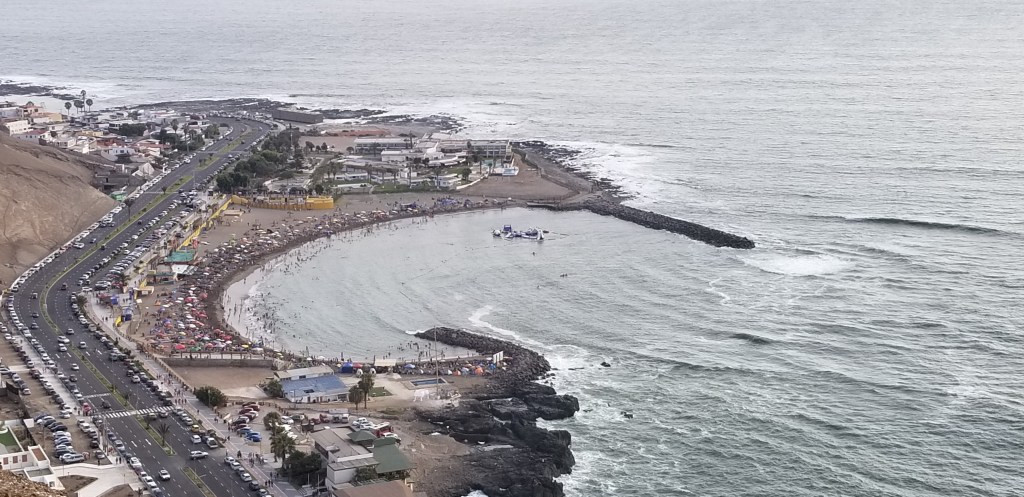
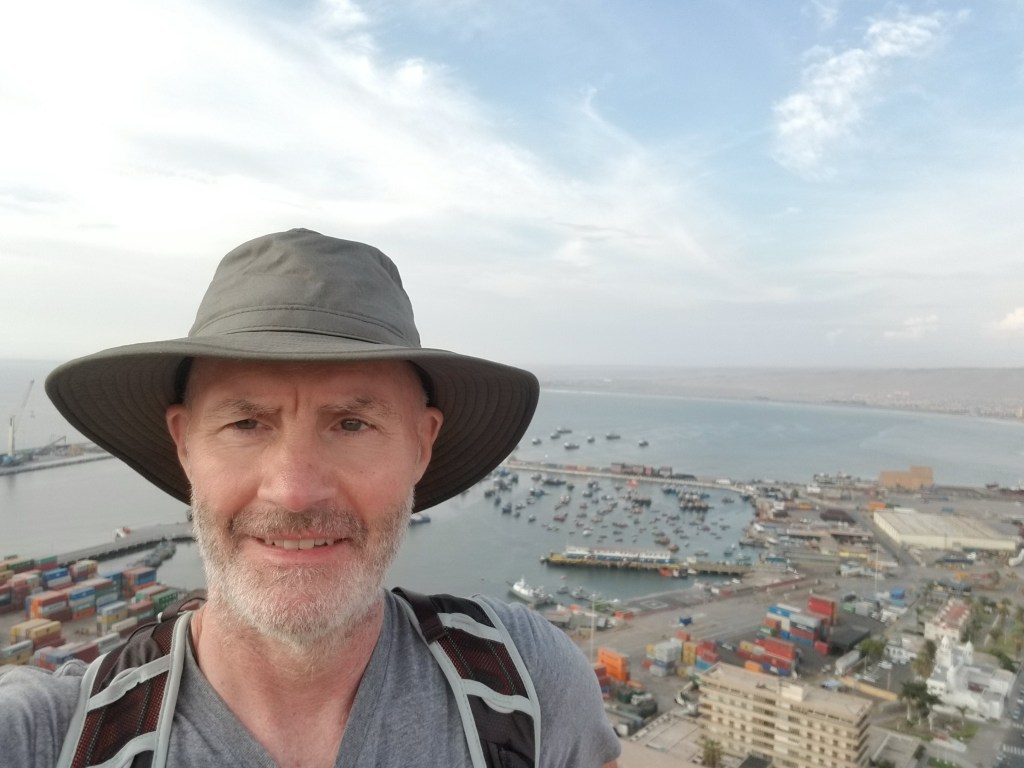
Sunday, I got up relatively late and organized all my gear, walked the city and then headed to the beach. As you can see below, the beach was packed with families and kids enjoying an ideal Sunday in the sun. I then walked to and up the hill that defines the southern end of the city. It was a good day to collect my thoughts and get some rest.
Feb. 17 – Arica to San Pedro de Atacama – Meeting Jose and Luciano
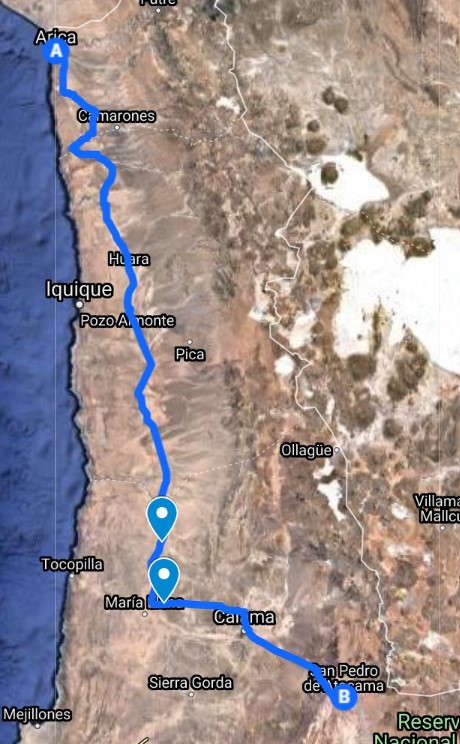
Monday, I started my southern journey. Arica, as you can see on the map above, is at the northern most edge of Chile and is surrounded by desert. The ride from Arica to San Pedro de Atacama was completely in the Atacama Desert. Part of the drive, I had already covered in the trip up to Arica, which was not my plan. I had intended to go from Arica east to Putre, into Luaca National Park and then take a dirt road south through the mountains along the border of Bolivia. However, it is rainy season in this part of the world. Upon checking in with a couple people with regards to my route, they thought the road I had planned to take would probably be impassable due to the amount of rain recently received. As a result, it was south on Ruta 5.
As I had described before, the Atacama Desert is one of the driest places on earth. The earth is baked, scorched and everything is either brown or sand colored…driving through it is tough and boring after about 15 minutes and I had about six hours ahead of me….ugh.
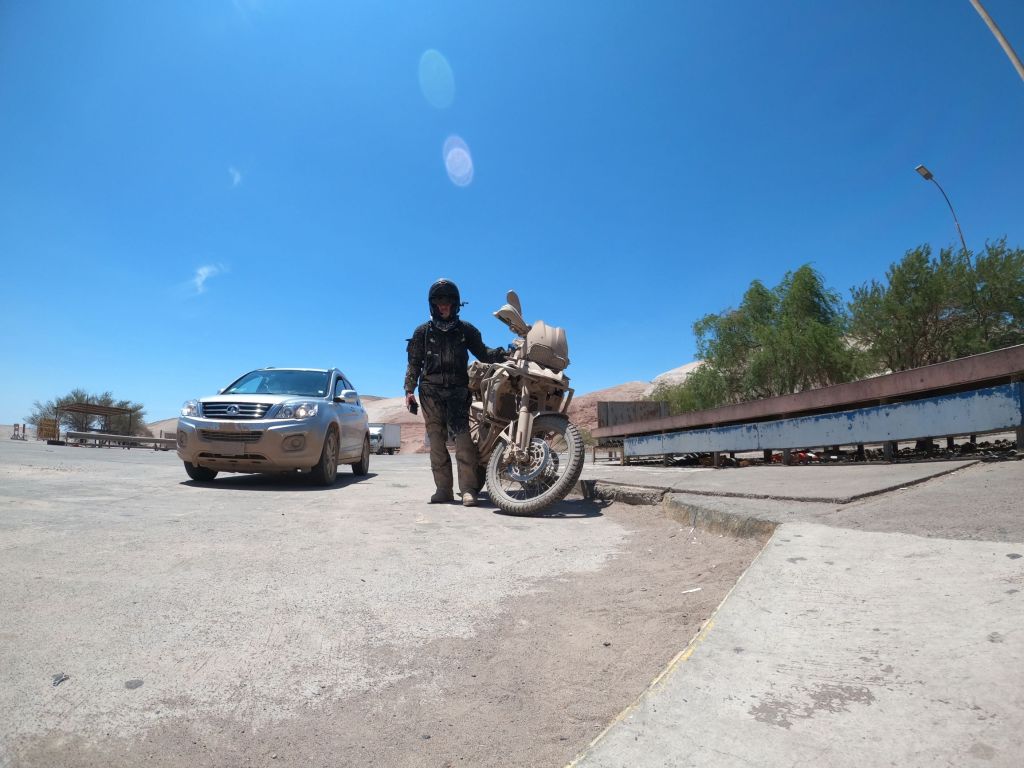
About 60 kilometers before the turnoff of 5 onto 24, there was a depression in the highway created so that a river can run over it. These are common in Chile and Argentina and are used instead of building a bridge. When I pulled up to the edge of the depression, it was filled with a sludge lake about 75-100 yards long and in places about two feet deep. Trucks and cars were carefully making it through but coming out the other side totally covered in muck. There was no way around this spot other than turning around and probably driving a 100 kilometers or more out of the way. So, I got up enough speed to ensure I didn’t stall out in the muck and went for it. As a result, I was covered in muck from head to toe and the bike was totally covered, as you can see from the picture below. Luckily, the gear I have is designed to withstand this type of situation. I looked like hell, but it didn’t really matter much.
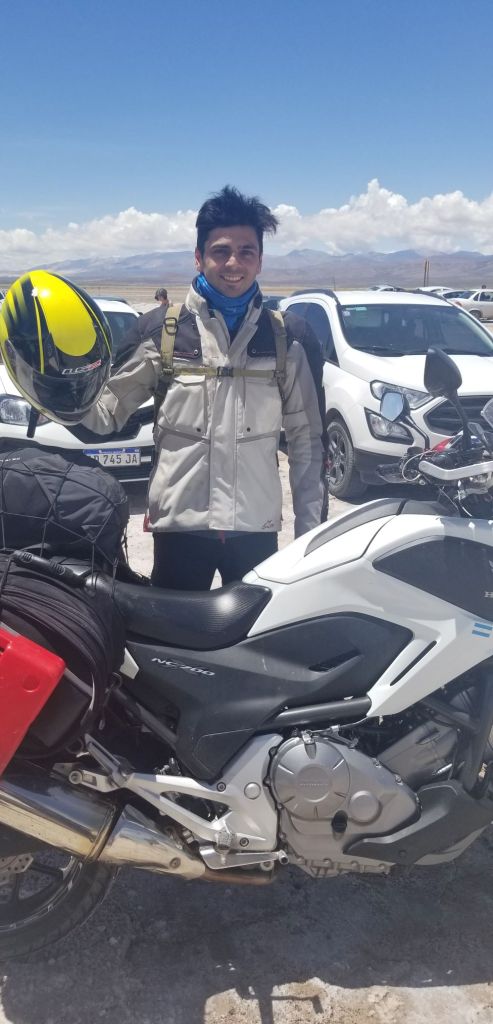
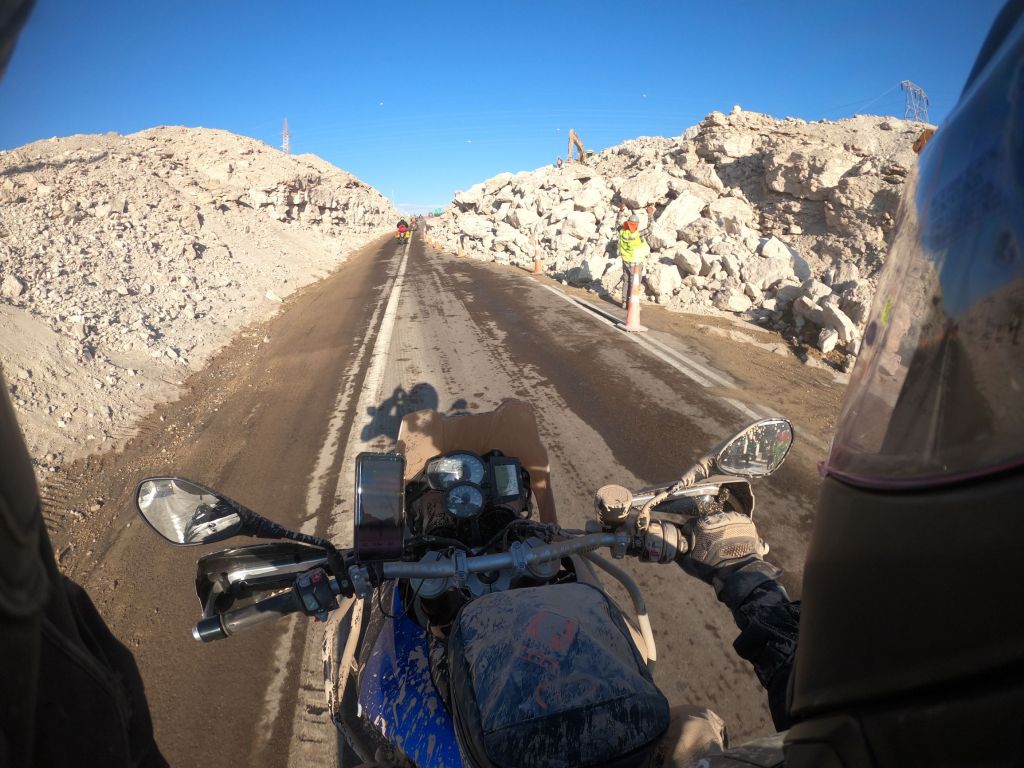
Almost immediately after I turned off 5 onto 24, there was a line of cars stopped and a barricade blocking the road. A construction crew had attempted to explode some rocks off the side of the road and they fell into the road, making it impassable. I was sitting in the line of cars, baking in the 90 degree heat in all the gear I had on and I looked over and there were five guys, of which four were on motorcycles, in the only shade for miles created by a 40 foot by 30 foot sign talking very expressively. I went and joined them. As soon as I pulled up, they all came over and started talking to me in Spanish, of course. However, one of the five started talking in English and explained to me what the others were saying. Luciano, a 30-year old from Argentina, was the English speaker. In the group of six, there was one Argentinian, Luciano, one Spaniard, Jose, one Chilean, one Colombian, one Peruvian and me. We spent three and a half hours sitting under the sign until they reopened the road. Luciano and Jose were both headed to San Pedro so I rode with them. Luciano also took care of me and got me into the hostel he was staying. Jose was staying down the street. We got together for dinner and had a great night talking about travel and motorcycles and life. Both Jose and Luciano have been riding for years. Jose, has ridden through 56 countries on motorcycles and takes two months of every year to go off and travel around on a bike. He’s also married and has kids. Jose asked that I take the photo of him below on the next day, which is another story…total character!!!

Below is a photo of the passageway made so we could get by the exploded section of the road…maybe a little overzealous with their dynamite!
Feb. 18 – San Pedro de Atacama – Day Off the Bike and Swimming in Baltinache
San Pedro is a tourist city populated by mostly 20-40 year olds from South America who are there to explore the nearby mountains, deserts and salt flats. It appeared everyone was taking an organized tour of some sort on everyday they were there. The city reminds me somewhat of Santa Fe in that it is mostly one-story adobe buildings with a heavy tourist presence. The streets are all dirt. The scale of the town is very manageable. We decided over dinner that Jose and I would take a tour of a salt flat and swimming hole about 50 kilometers outside of town. Luciano was going to take a day to rest and clean up his bike and gear since both Jose and he had to also cross the muck lake on Ruta 5.
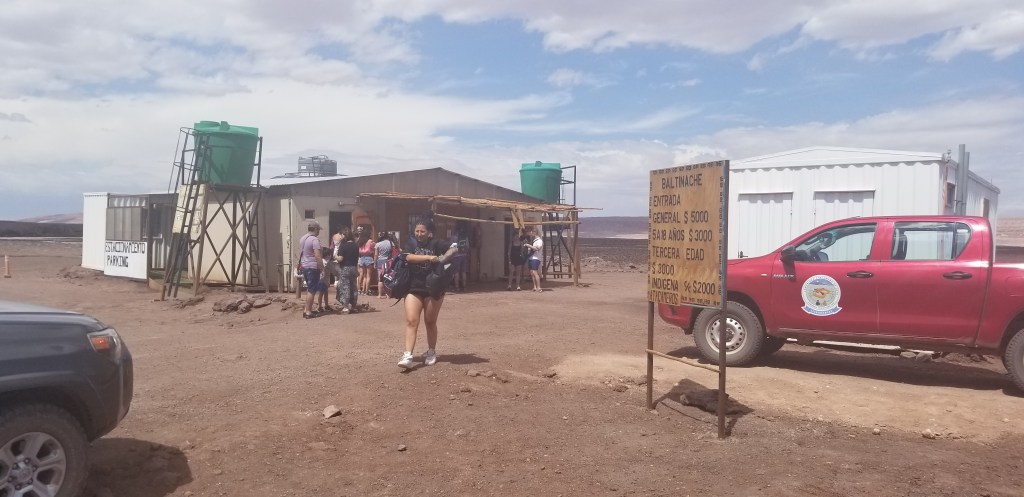
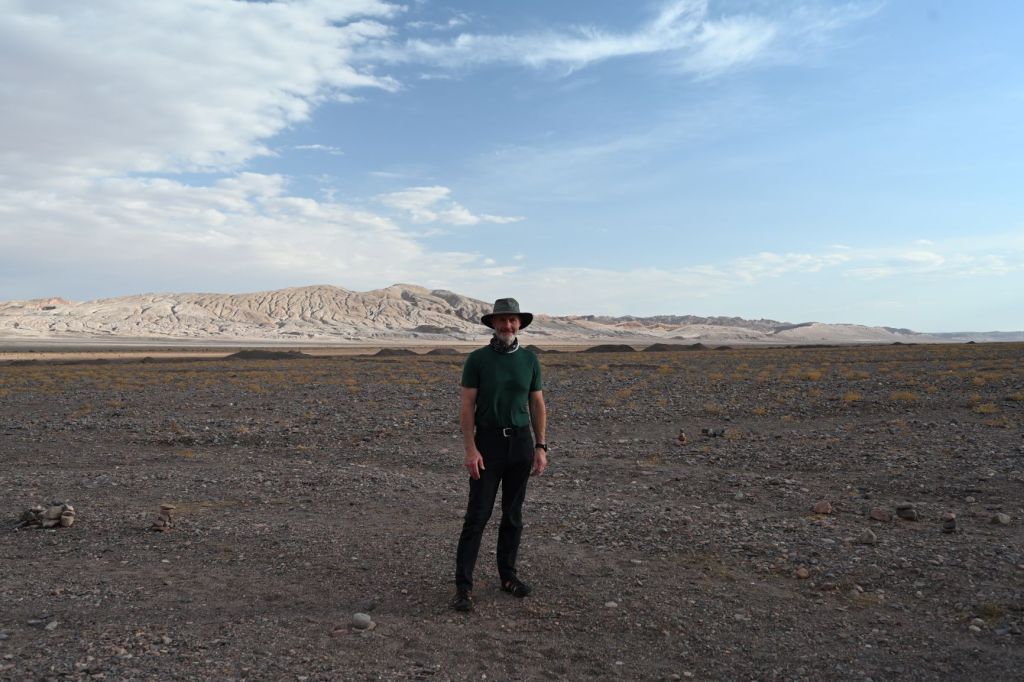
On Tuesday, Jose and I headed off to Baltinache, a salt flat and salt pool. There were about 75 people there for a swim. Below is the entrance and the only facility available for miles around. It was a real scene about 90 minutes after this as about 100 people tried to take showers in this building to clean the salt off their bodies.
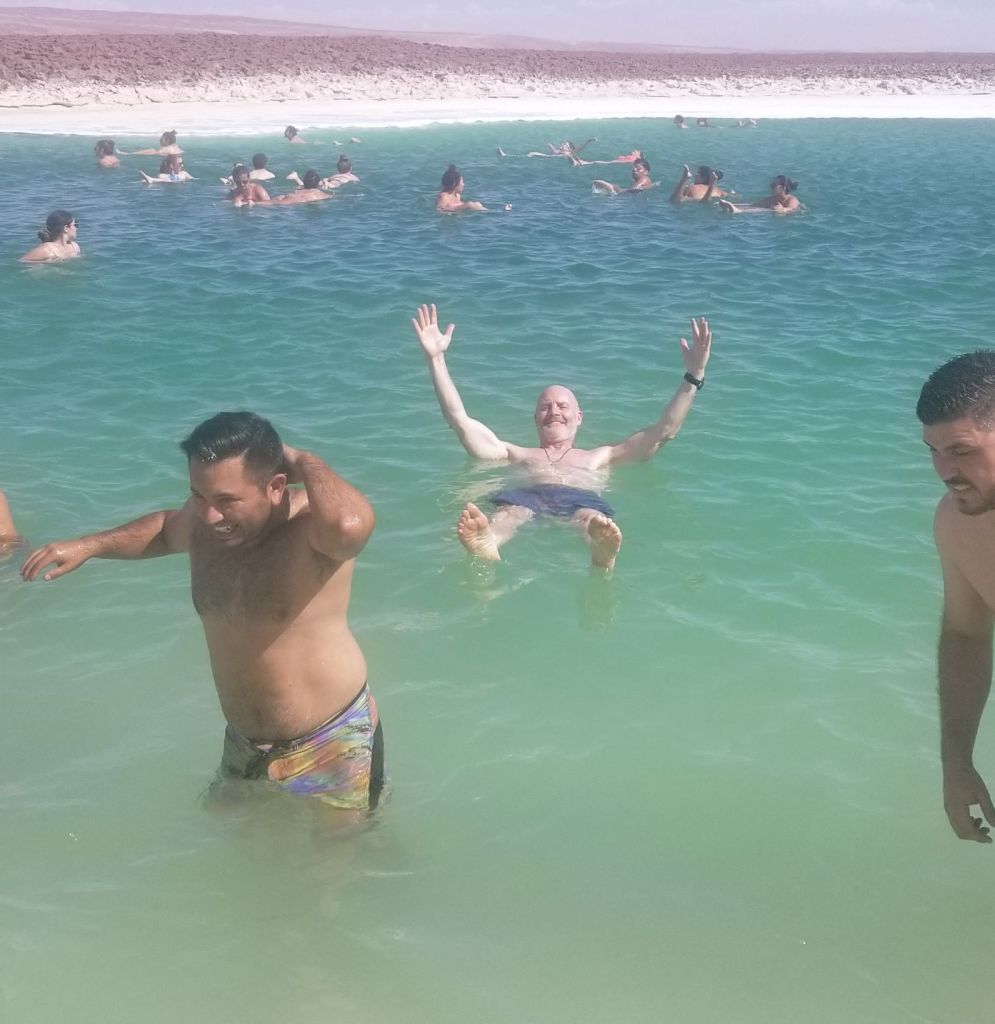
The water in the pools in the salt flat supposedly have a higher salt content than the Dead Sea. The color of the water was such a contrast to the rest of the environment. The photo below starts to capture this.

It was a funny scene with 100 or so folks swimming out in the middle of a salt flat.

After swimming, we headed out into the desert, had a few cocktails and watched the sunset.

Feb. 19 – San Pedro de Atacama to Purmamarca
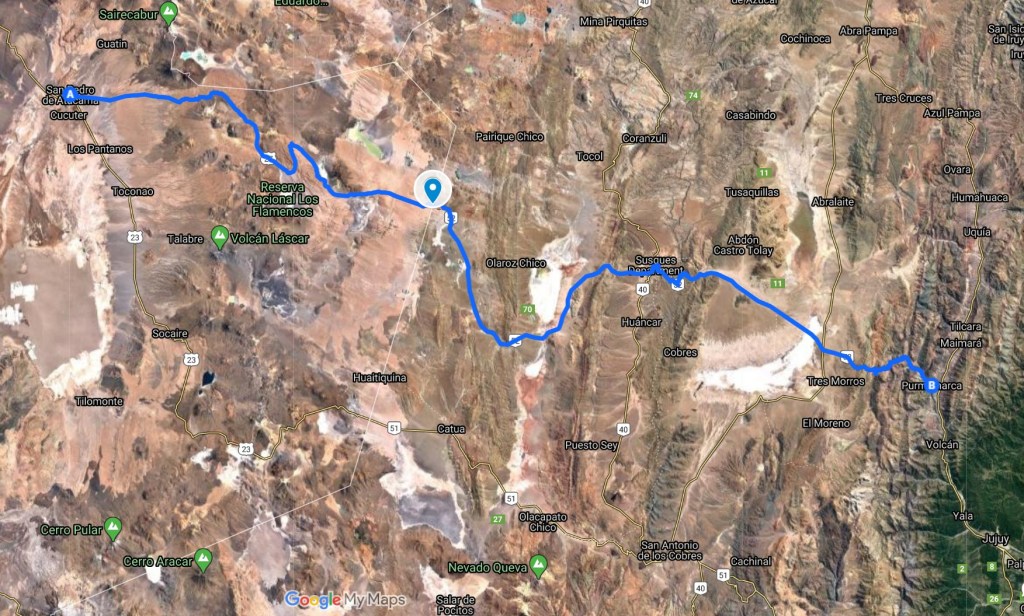
On Wens. morning, Luciano and I headed east into the mountains over Paso de Jama, across the Chile Argentina boarder to Purmamarca. Jose headed east to meet up with a friend in Iquique.
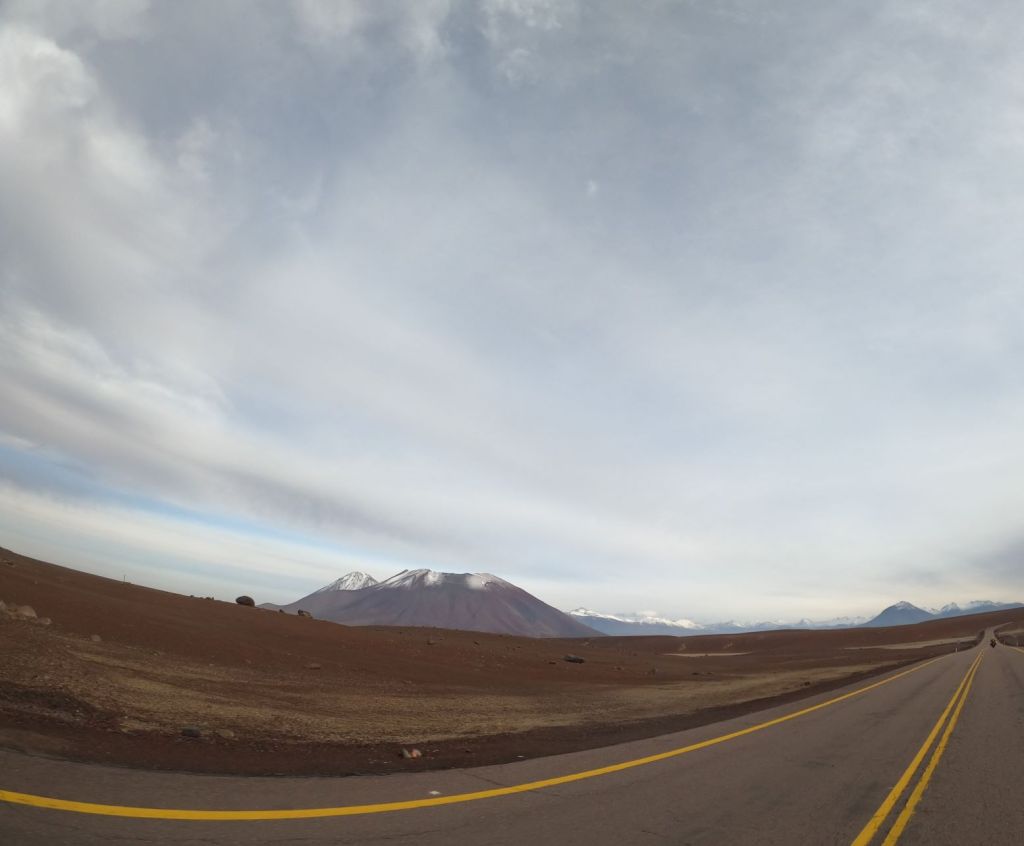
Paso de Jama is a high alpine pass with a peak elevation of 15,850 feet, making it one of the highest highways in South America. We made the passage early in the morning and it was probably about 15 degrees Fahrenheit. As Luciano said before we left, make sure you wear everything you have in your bag to stay warm! It was cold! Below are a few photos that try (poorly since we were hauling butt to get through the cold and not willing to stop and take pics) to capture the surreal landscape of the area.

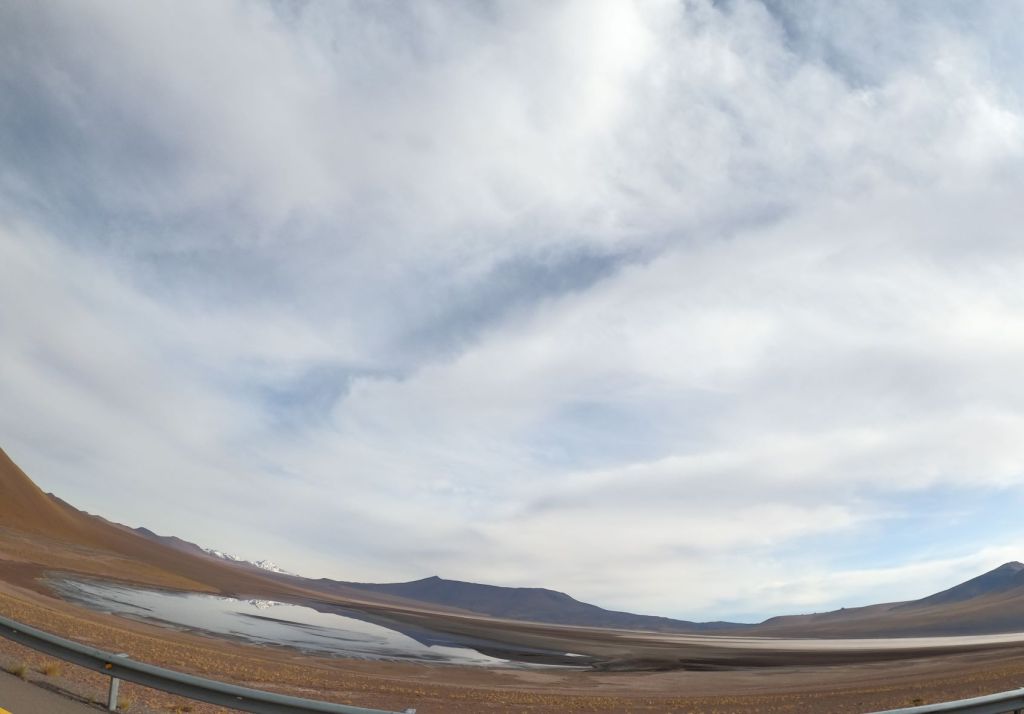
The image below is of a lake that we passed. You can’t see it here but the edges of the lake were steaming from geysers that ringed most of it.
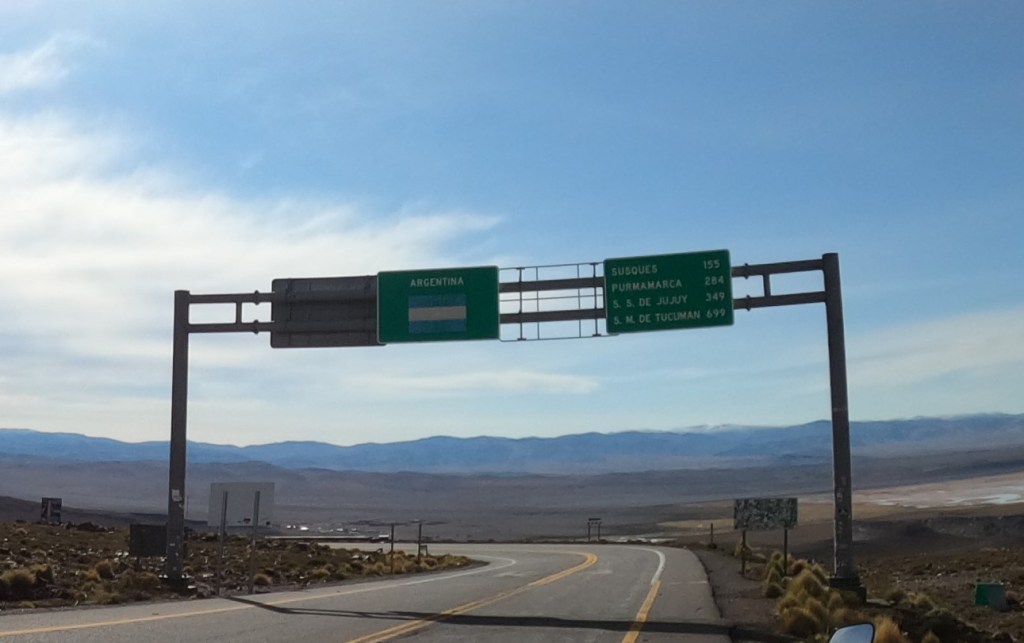
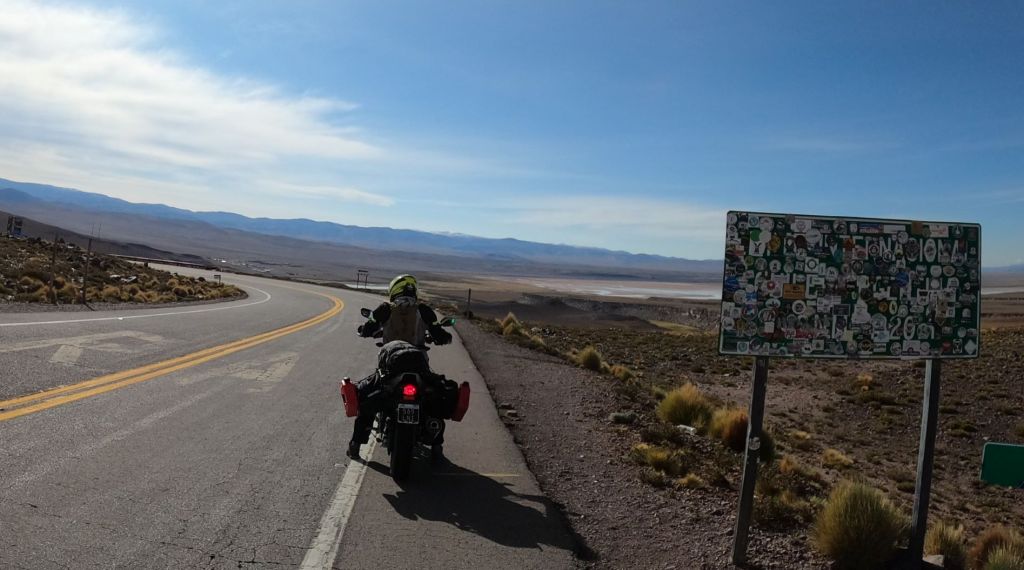
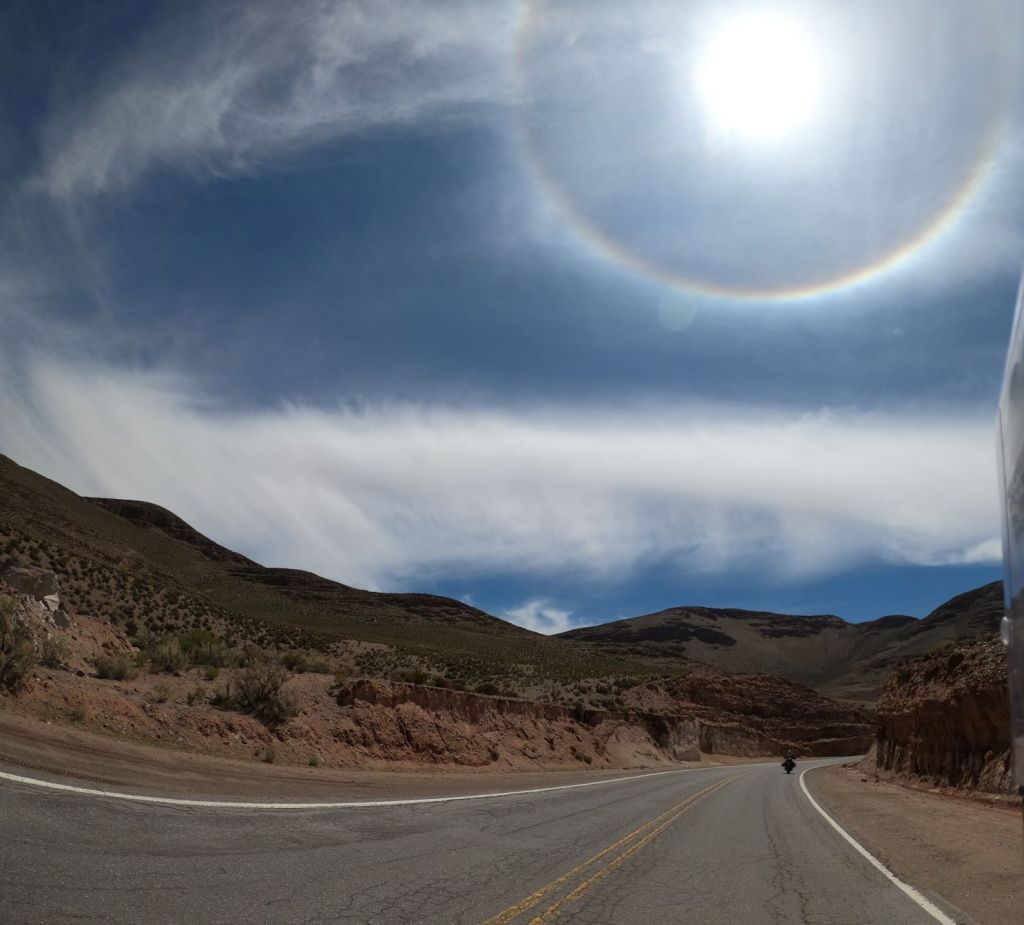
After we crossed the boarder, the landscape changed rather dramatically. For about 30 minutes there was a rainbow encircling the sun called a 22-degree halo (because the ring has a radius of approximately 22-degrees around the sun) and is caused by light refracting off of ice crystals contained in cirrus clouds…gorgeous scene!
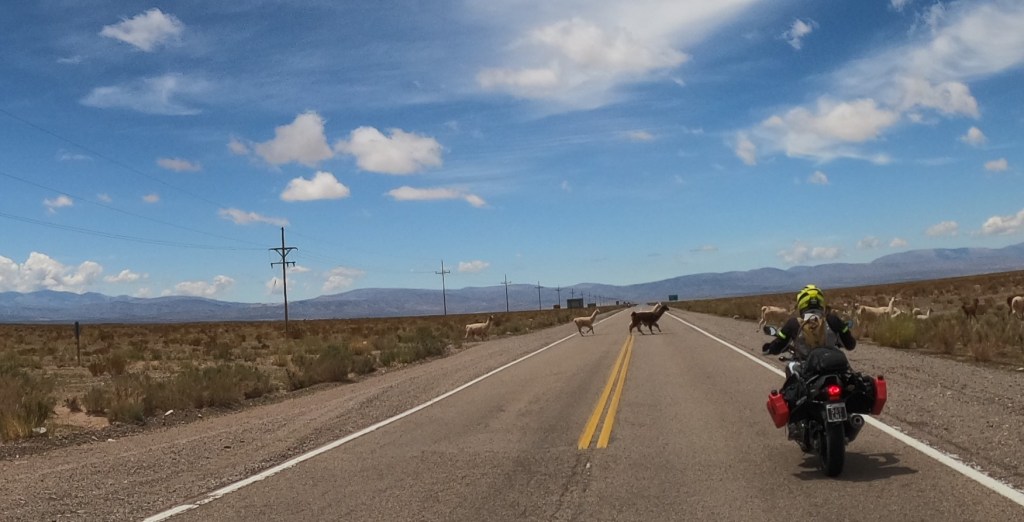
Herd of llamas crossing the road below.
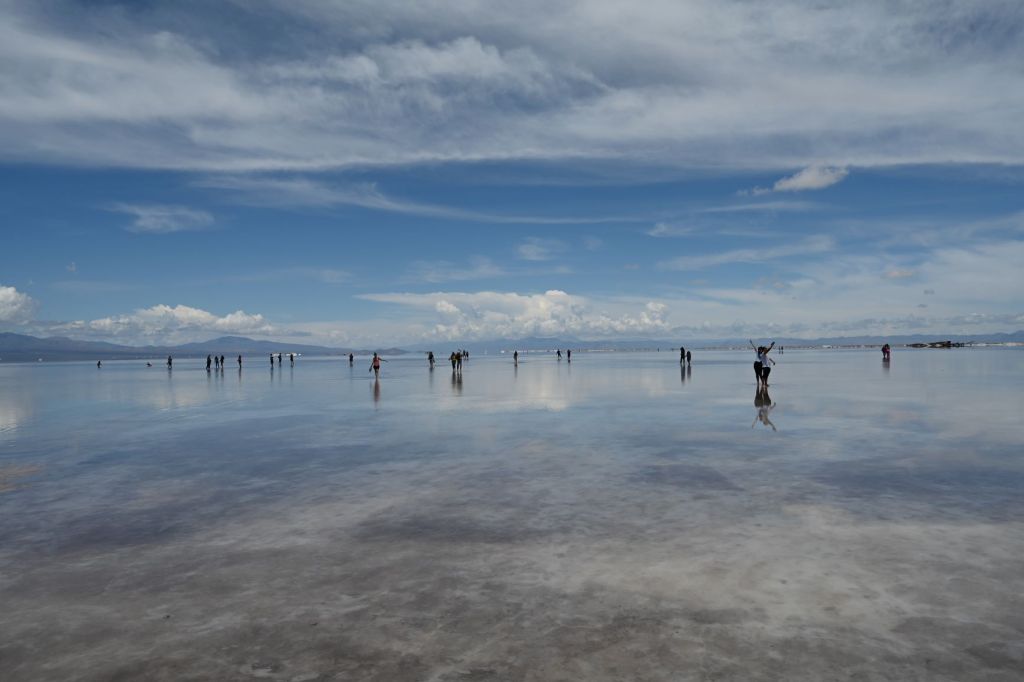
We passed by the Salinas Grandes salt flats on the way to Purmamarca and stopped for lunch. The flats were covered with about two inches of water and created a surreal scene. People were walking out 500-1,000 yards on the flat and were clearly visible as you can see below. What is interesting is that the combination of the reflection off the water and light creates a loss of perspective.
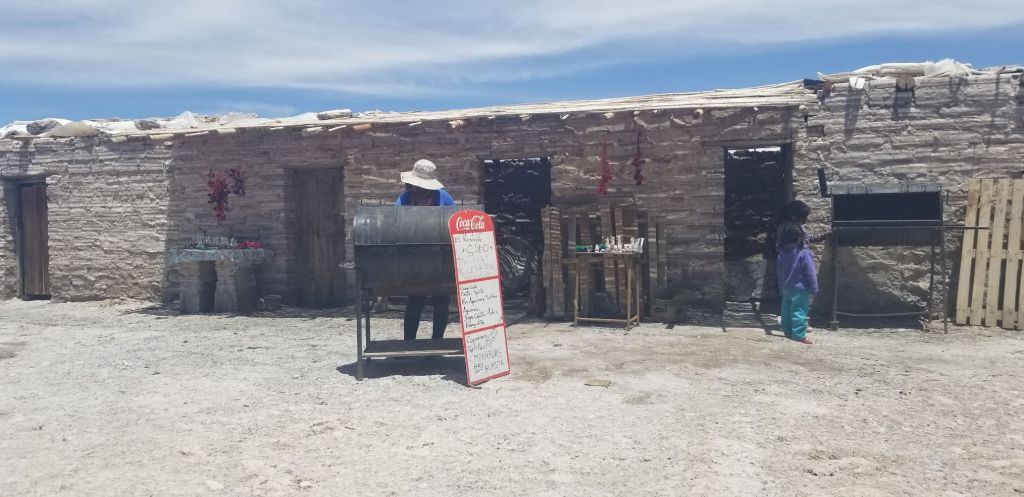
At the edge of the flat, Luciano and I stopped for a lunch of empanadas. As you can see below, our chef was a local woman and was working out of a building constructed of salt. Blocks of salt were cut out of the flat and stacked together like bricks. The empanadas were great!
Below is a photo of a section of the road close to Purmamarca. A ton of fun to ride on a motorcycle.

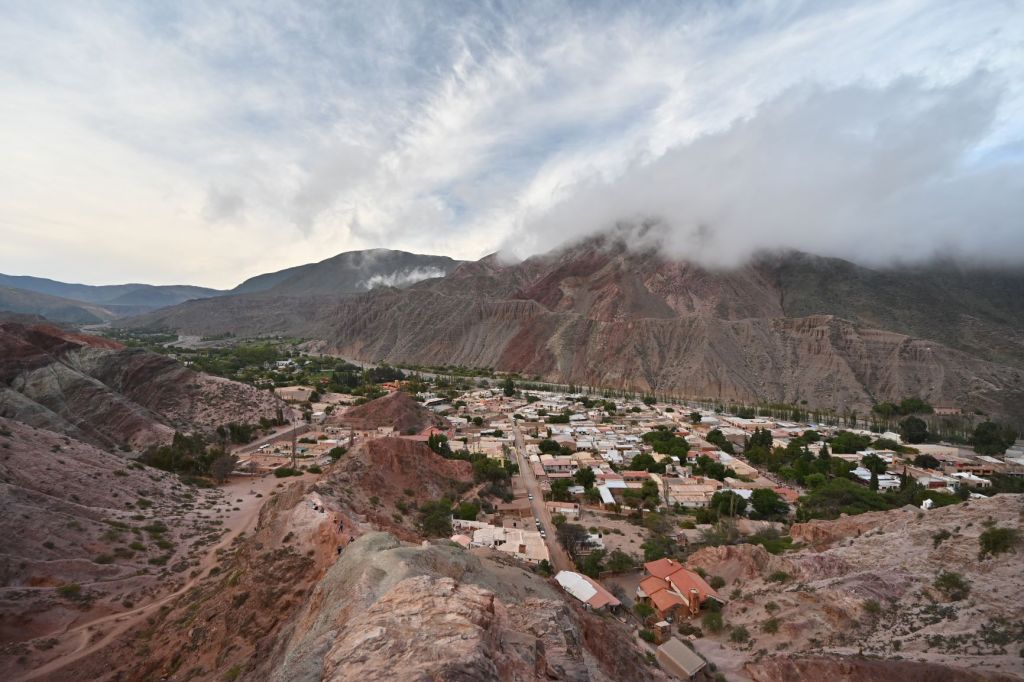
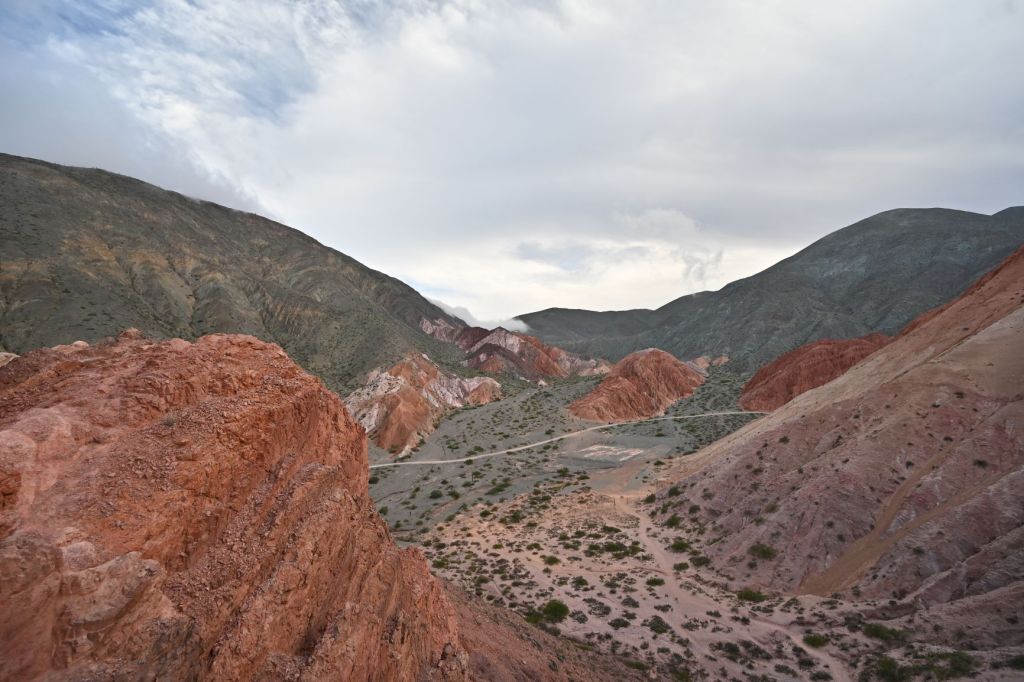
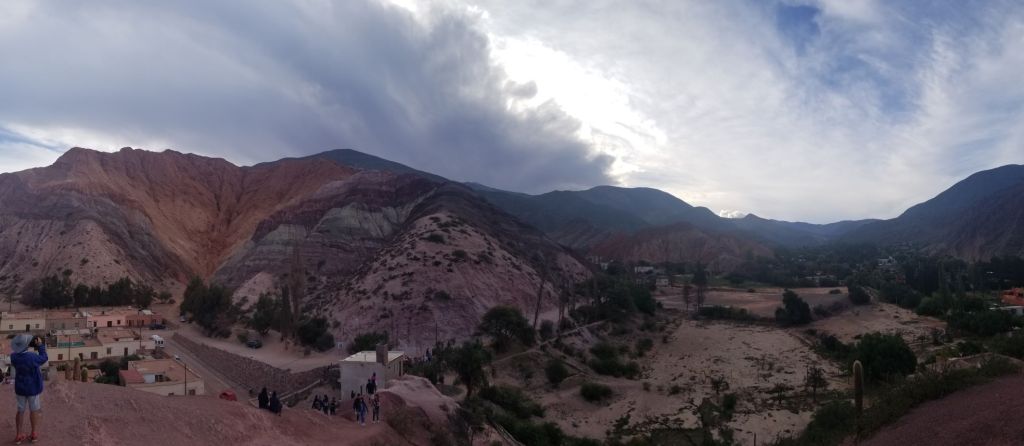
Luciano and I pulled into Purmamarca and said our goodbyes. Luciano was headed back home and I had to stay and make a phone call. After I freed up, I walked around the town and took several photos, which are below. The rocks in the mountains around the town are brightly colored and provide a great backdrop for the town. Below is the entirety of the town.
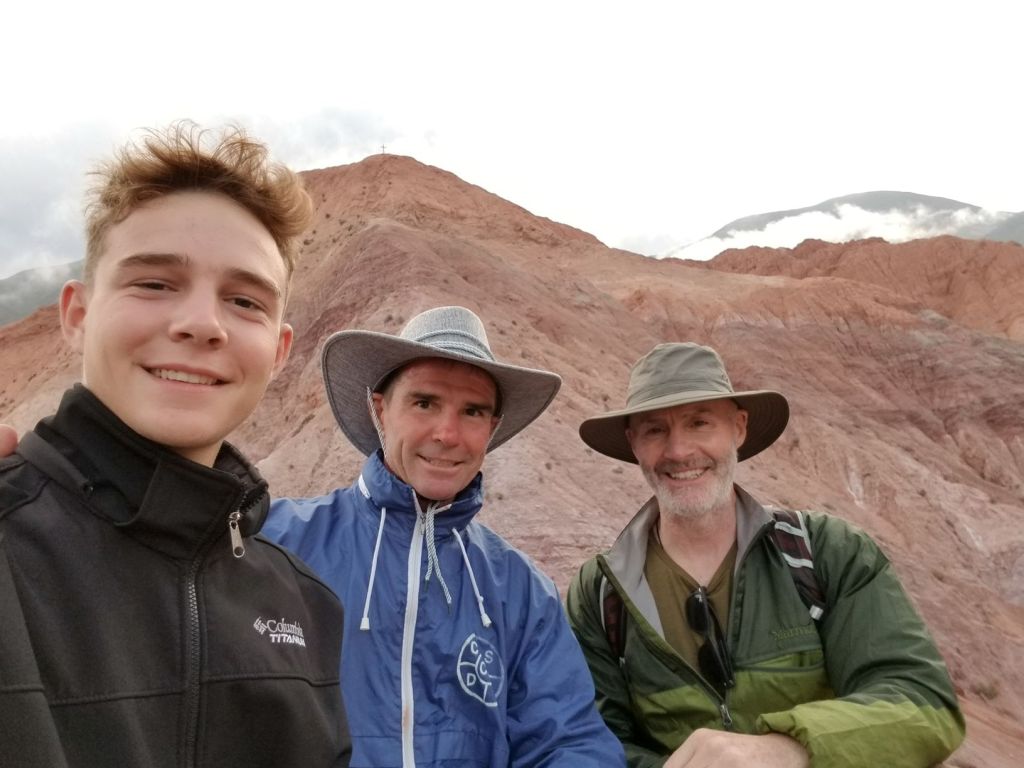
I was waiting to pay to make the climb above and a family of Argentinians came up and inadvertently cut in front of me. Once they realized it, they paid my entrance fee and we started up a conversation. Below is a picture of a father and son, which were part of the group. The father, Jose, had been a professional soccer player in Italy and had lived there for three years. Jose, didn’t speak English, but his son, whose name I didn’t get, did and we were able to chat. Jose turned to me and asked my why I was in Argentina and I told him about the trip I’m on. He thought about what I said and then said that Argentina is a mess, politically and economically. When he said this, his expression conveyed sadness, resignation and a bit of despair. It was a very poignant moment. In the next, his son told me that his father had been very strident in ensuring he learn English so that he would have a better future. This all happened in a couple of minutes before the photo below was taken. Those few moments communicated to me a significant amount about Argentina and its issues.
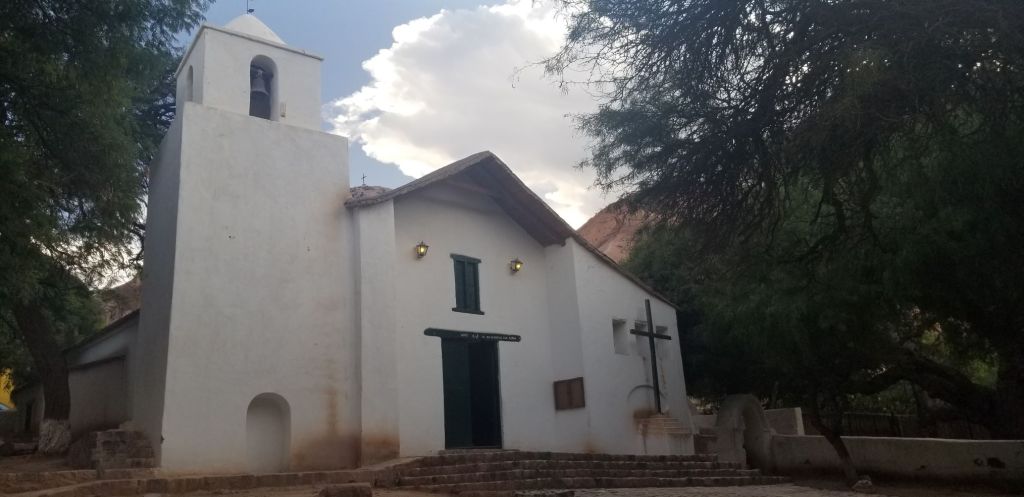
The Catholic church below, Santa Rosa de Lima, sits on the side of the town square. It was built in 1648.
Feb. 20 – Purmamarca to Jujuy with a Visit to Humahuaca
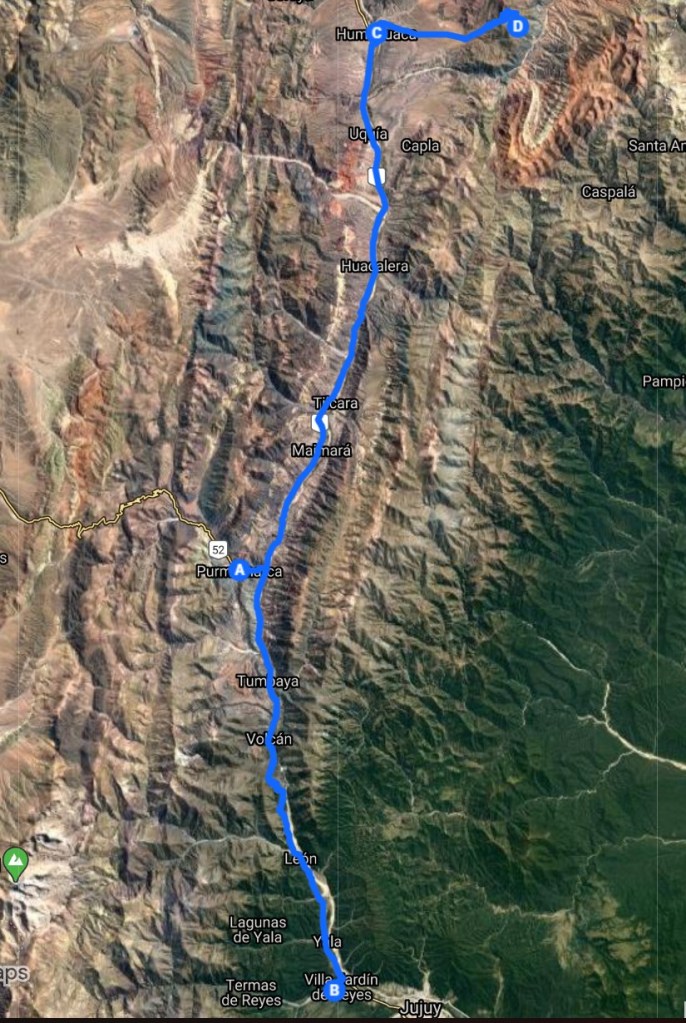
I headed north out of Purmamarca to visit a spot that Luciano said was a must see. Luciano has become my guide for Argentina. He sends me WhatsAp messages daily with suggestions for my routes and where I should stop and detour. His suggestion for Thurs., Feb. 20 was Hornocal o Cerro de 14 Colores, which is a mountain that supposedly has rocks composed of 14 different colors. It was considerably out of the way I was going, but given the advice, I went with it. It was an interesting drive on the section that goes east. It was a dirt road up a mountain, and there were very few other vehicles, all four wheel drive, on the road. Ton of fun getting there and back in the dirt. When I got there the sign below was interesting to me because of the elevation indicator.
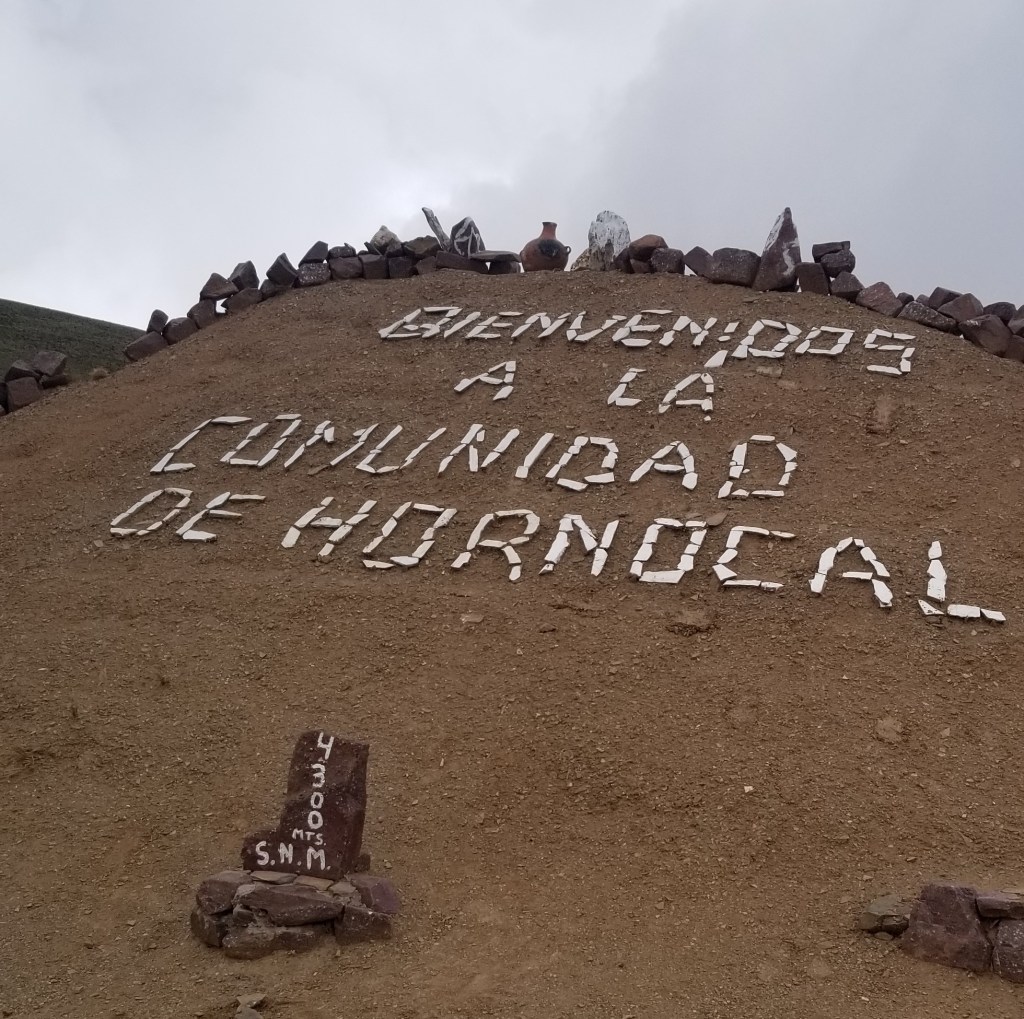
I had to pay a few pesos to enter and the woman below was manning the gate.

The trip was worth it. The views were fantastic and there may even be 14 colors of rocks in those mountains.


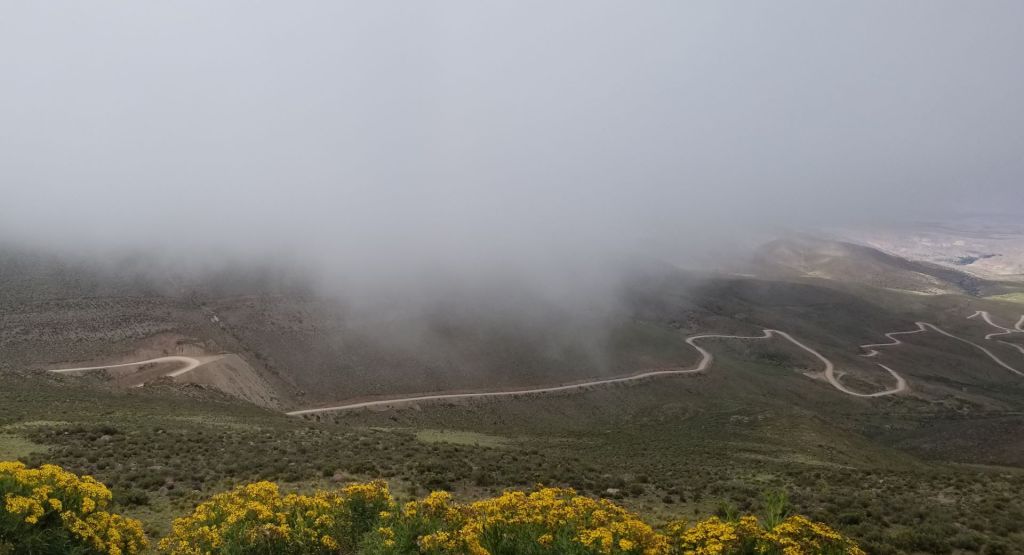
Feb. 21 – Jujuy to Cafayate – Driving Ruta 68 and Quebrada de las Conchas

Stayed in an interesting house outside of Jujuy (pronounced hoo hooiey). I am now trying to stay out of the cities since it is quieter and easier to park my motorcycle and ensure it is safe. The house was converted into several small apartments and there were people staying in all of them. The owner was a 30 something from the town and he and his buds came over and we chatted through cell phone translation apps. Interesting experience.
The drive was probably the best so far. It was raining lightly so not too bad an intrusion. I was taking Ruta 9 to 68 which would then merge into 40. Ruta 40, which is the famous route that goes pretty much the length of Argentina and is considered to be one of the great motorcycle rides in the world. Ruta 9 is a secondary road and not much traveled. At times it is just about one lane wide, more of a bike path. It twists and turns around the side of a mountain in a temperate rain forest. Below is a photo and a video of the ride. Interesting end of the video so stay with it.
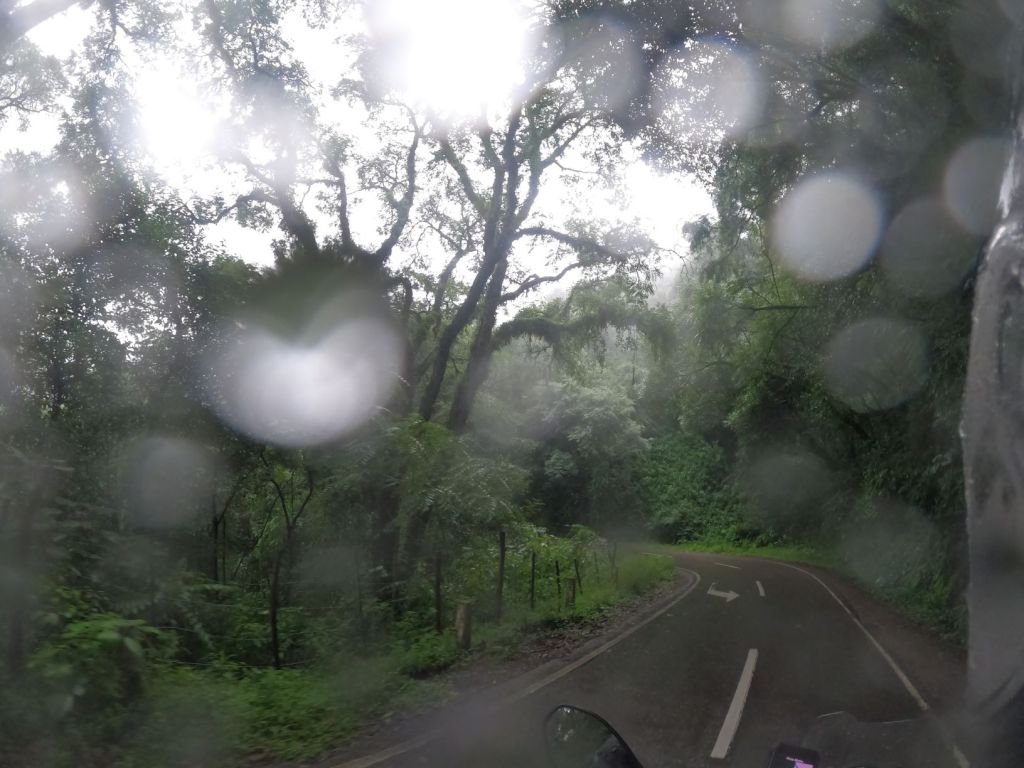
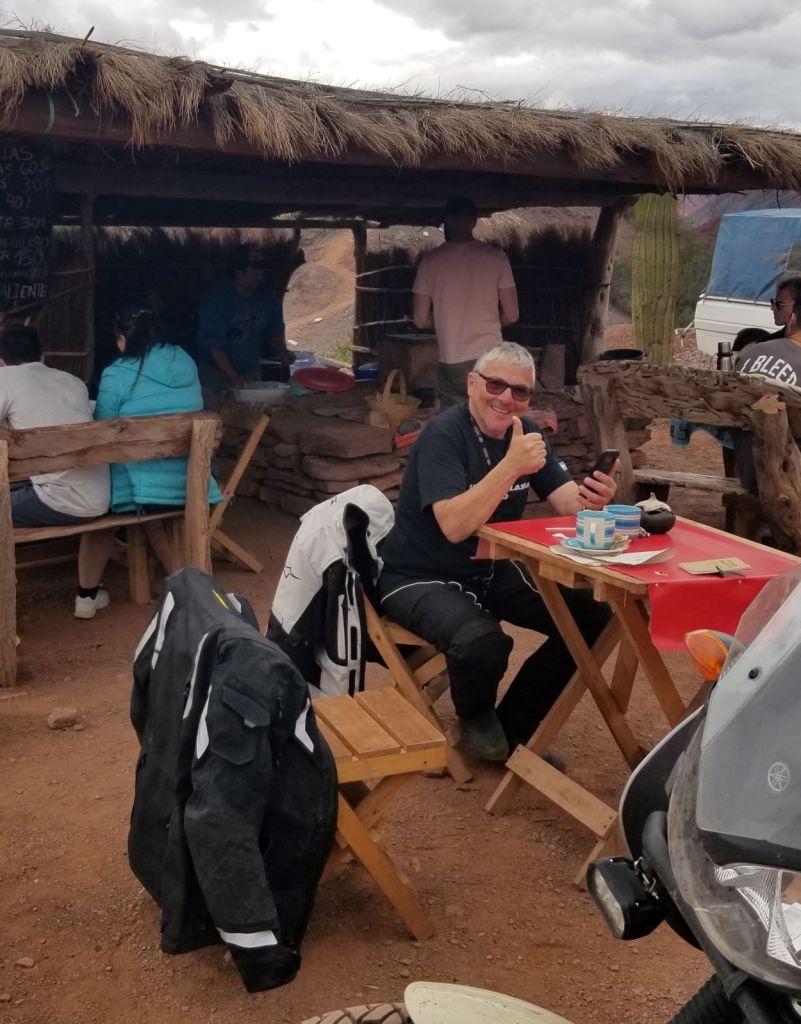
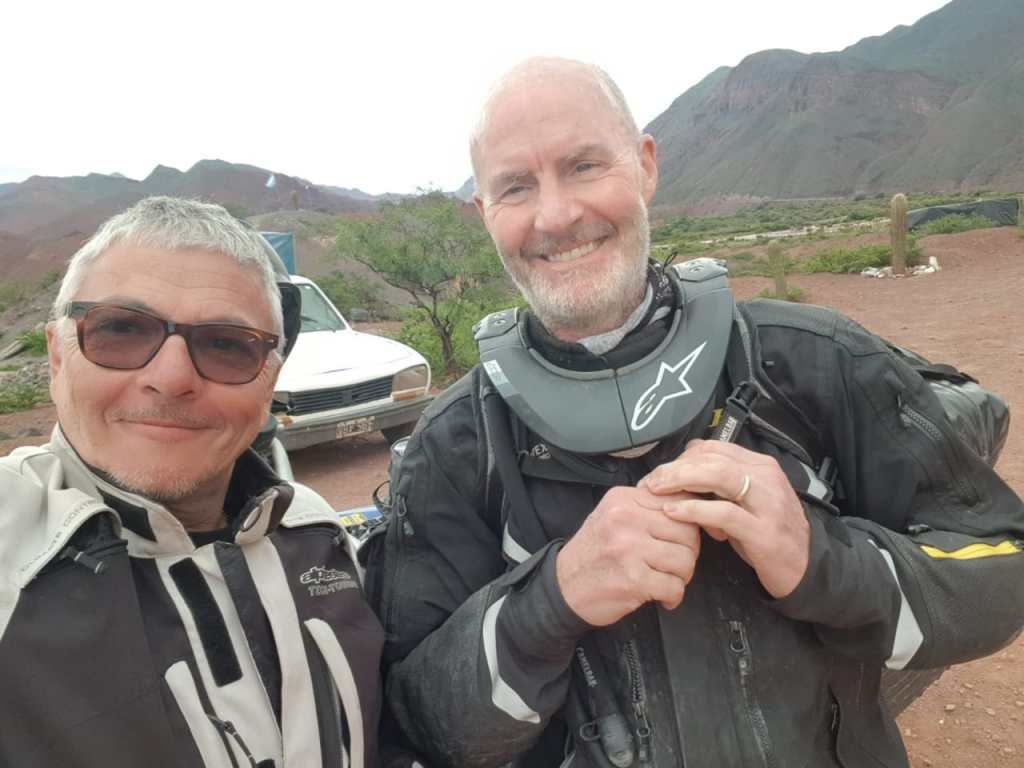
Later on in the day I entered into Quebrada de las Conches, which is a desert canyon with the Rio las Conches running through it. I stopped for lunch at the stand on the side of the road and met Pedro, who is pictured below. Pedro lives in Cordoba, Argentina and left on Dec. 8th on his motorcycle, headed south to Ushuaia and is now headed north to Anchorage, then east to Chicago and Toronto, then south to Miami and then back home to Cordoba. Pedro will be gone for about a year and living on his motorcycle. His English and my Spanish were equivalently poor, but we were able to carry on a conversation over lunch. As it turns out, Pedro loves the Blues, hence the trip to Chicago. We hit it off after finding this out. I will be Pedro’s host in Chicago for a Blues tour sometime in 2020. Pedro also fought in the war with England over the Falkland Islands.
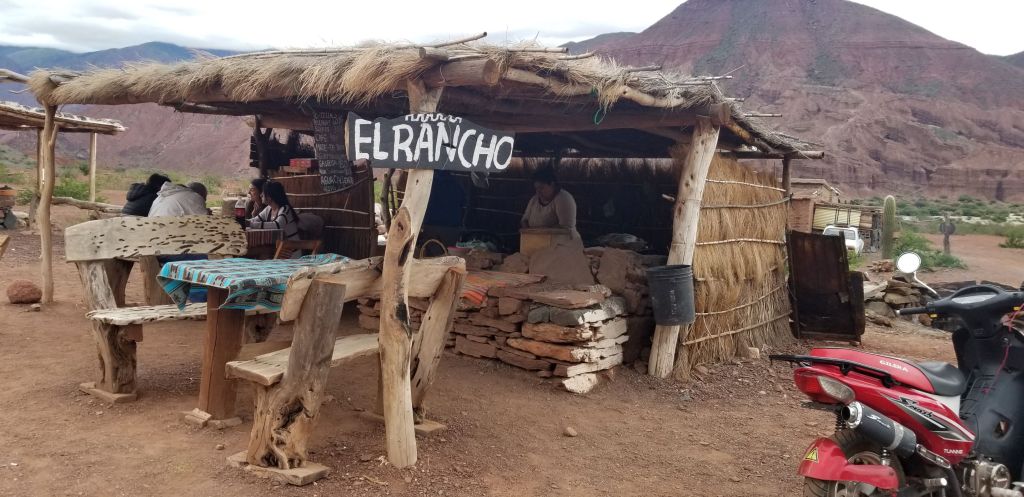
Panoramic views of the Quebrada below.


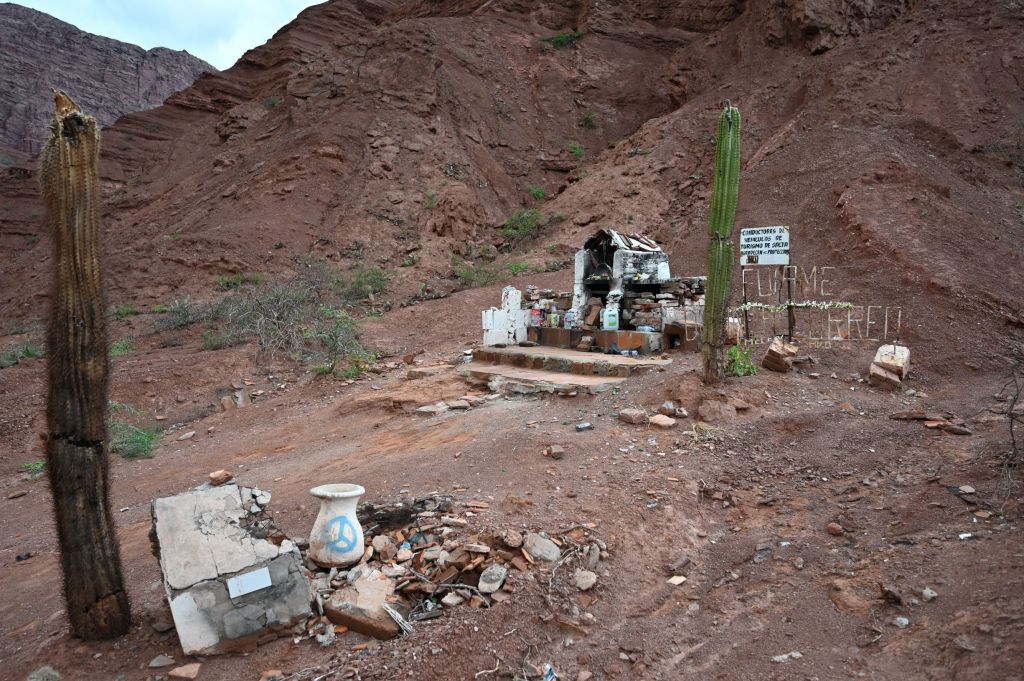
Throughout Chile and Argentina there are roadside shrines to those that have been killed at that spot on the road. They range from very small crosses to buildings constructed with bricks and blocks and whole cars encased in them. I thought the one below was interesting since it was so forlorn with empty Coke bottles and other assorted junk, dying cacti and the sign in the back which translates roughly to “drivers of salta tourist vehicles appreciate your protection.” Not sure if there is some irony being communicated there.
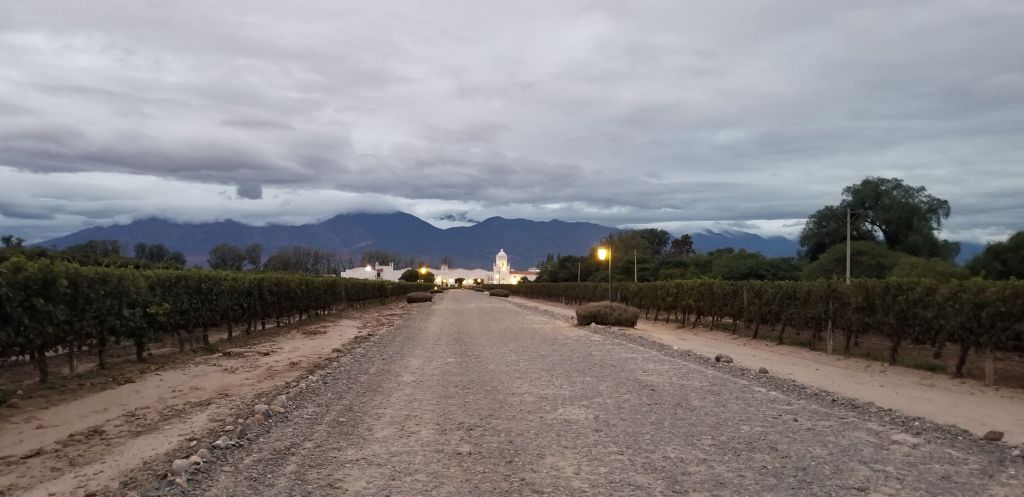
I pulled into Cafayate, which is the center of a significant wine production area and had a splurge dinner at the winery below, Bodega El Esteco…very nice place!!!
Feb. 22 – Cafayate – Day Off the Bike
I took off the 22nd and hiked the Los Estratos trail just outside of Cafayate in the Quebrada. Below are some photos I took on the hike. The hike is rated on of the best in Argentina and I was the only person on the trail that day. The trail was difficult to follow for the first third of the track, since it is in a dried up river bed. In the river bed were a number of tracks from one or more pumas, which definitely put my head on a swivel.

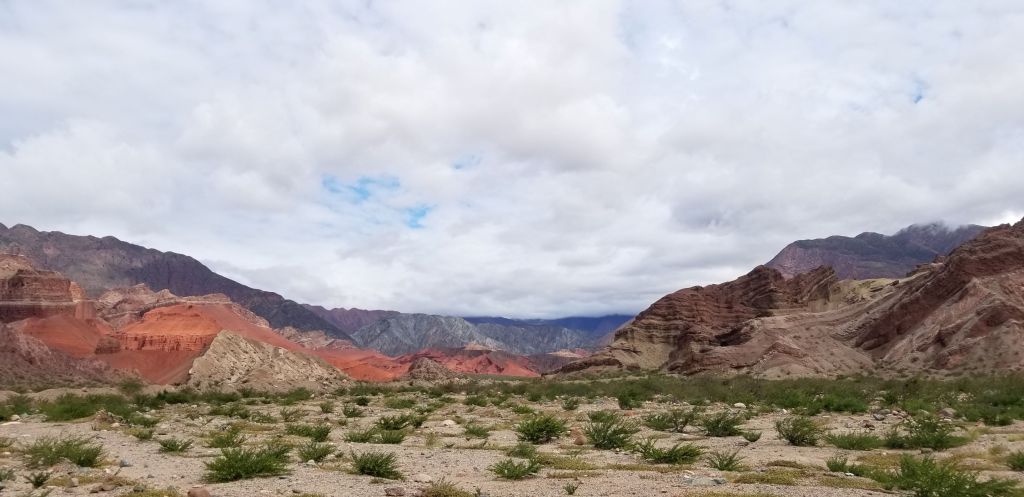

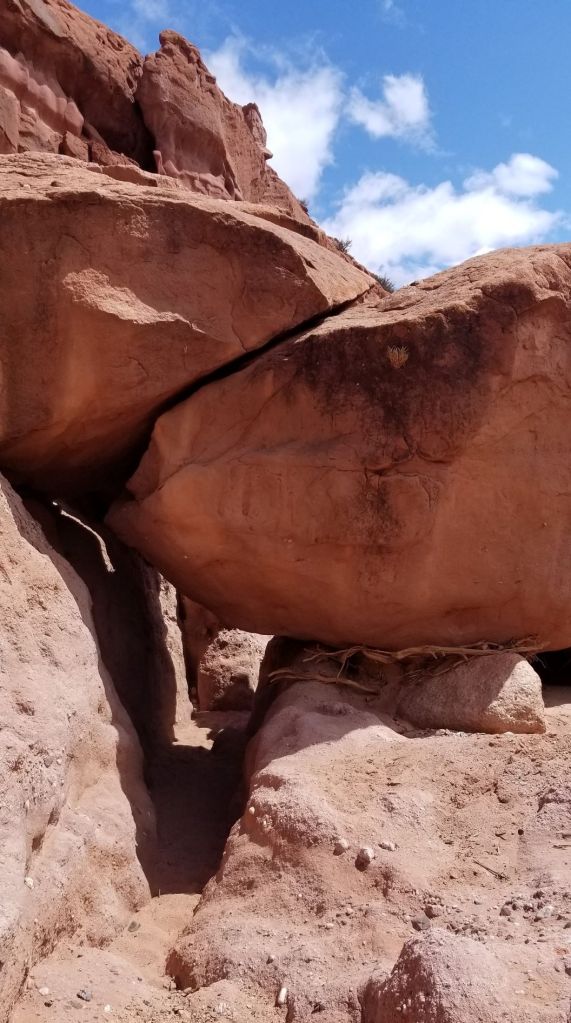
The trail then headed into a slot canyon. Below are several photos that show the trail through the slot canyon.

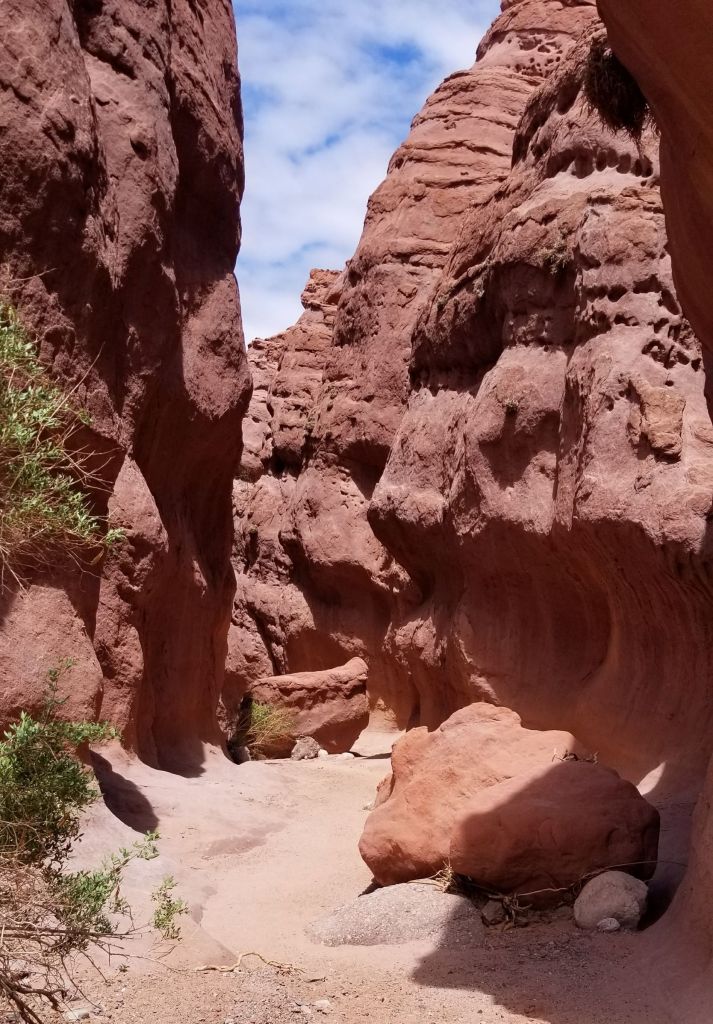
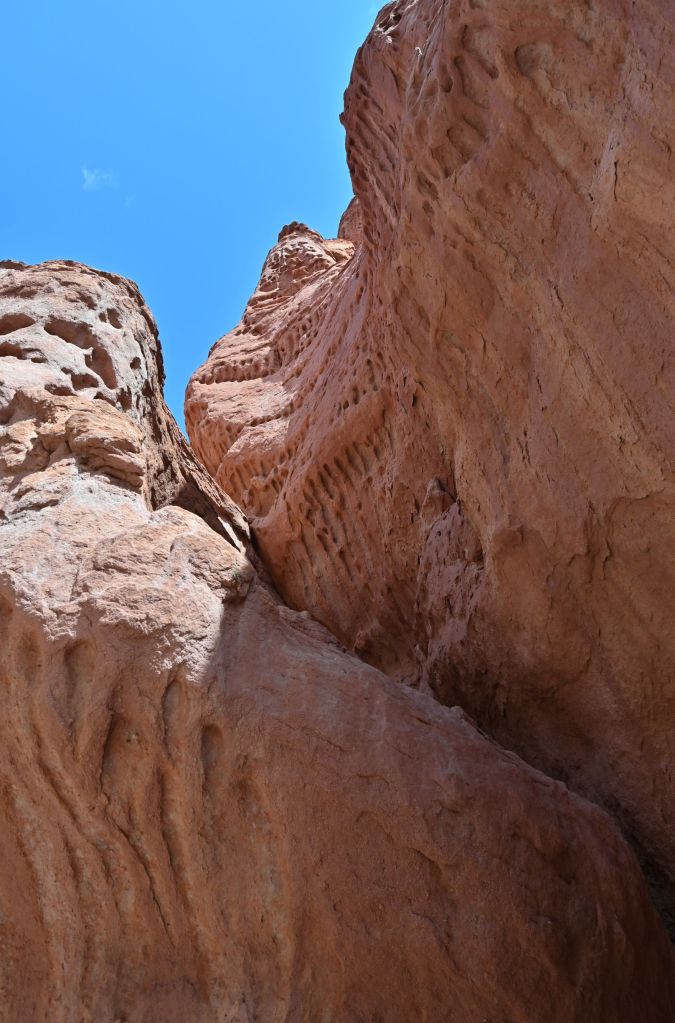
There were also some beautiful rock formations along the way with multicolored striations in the rock. Below are a few pictures that attempt to capture the coloring.
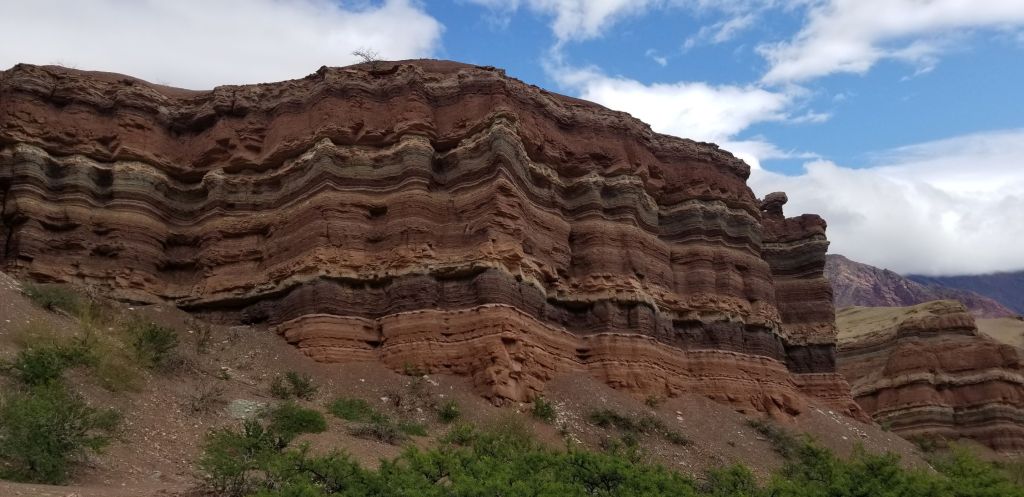
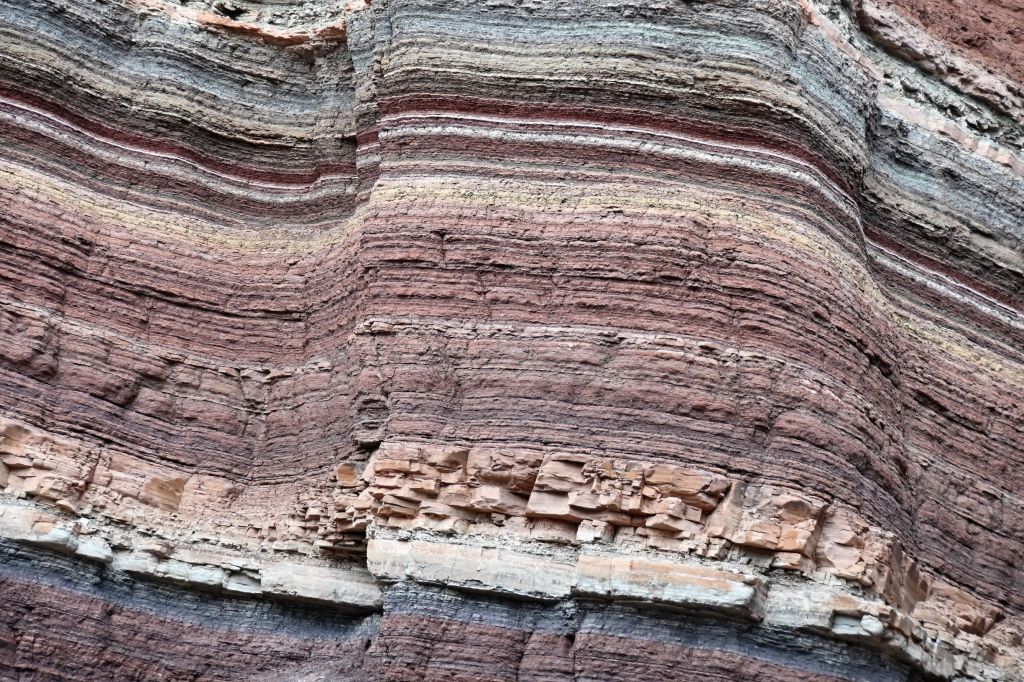
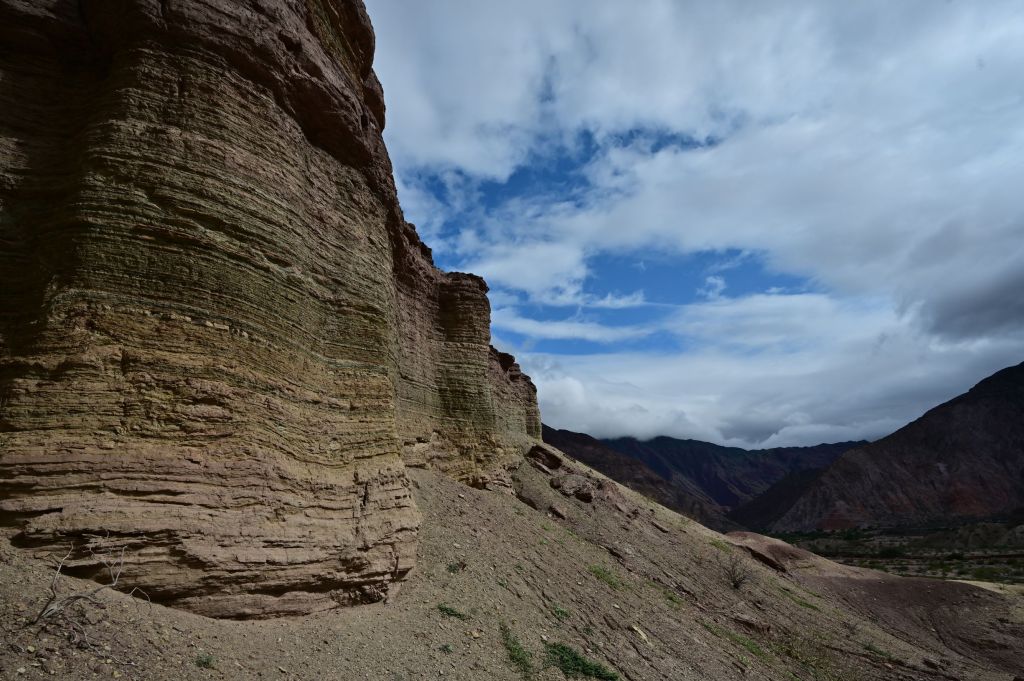
I got back to Cafayate and was hoping to get a good nights sleep and head out early the next morning. However, there was a three day musical festival going on that was somehow combined with Carnival. Below is a pic of a couple of the participants, which is a good proxy for how most of the town looked when I got back.
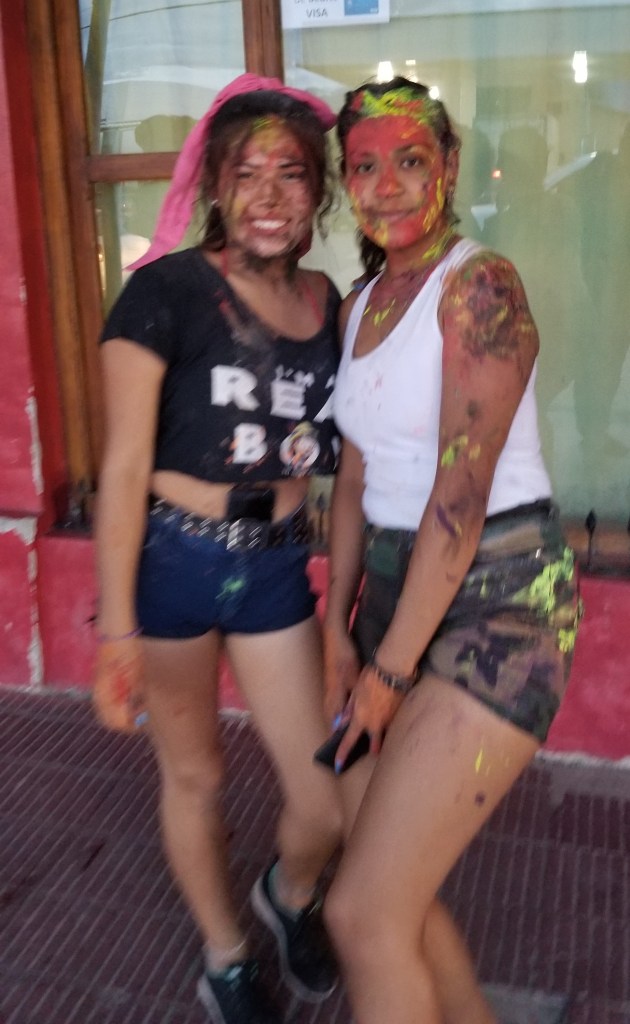
The music festival literally went on 24 hours a day for three days. There was an outdoor concert space about three blocks from my hotel and it sounded to me like the MC was in my room. The MC was a very enthusiastic guy with a booming voice and he woke me up maybe six or seven times that night. Once, he went on for a solid hour… When I got up to go the next morning at 6:30 there was a TV in the breakfast room showing the concert and there were 4,000 people going at it. The Argentinians love to party…and loudly!!!
Be back with more in a few days.
 Bob Carey's South American Adventure
Jose, rocking some god-level confidence. Reminds me of a Argentine Walter Sobchak. Love it!
LikeLike
Jose, rocking some god-level confidence. Reminds me of a Argentine Walter Sobchak. Love it!
LikeLike